Fountain Pen Nibs Explained: How to Choose the Right One
We earn from qualifying purchases as an affiliate, at no cost to you.
What Makes a Fountain Pen Nib Different
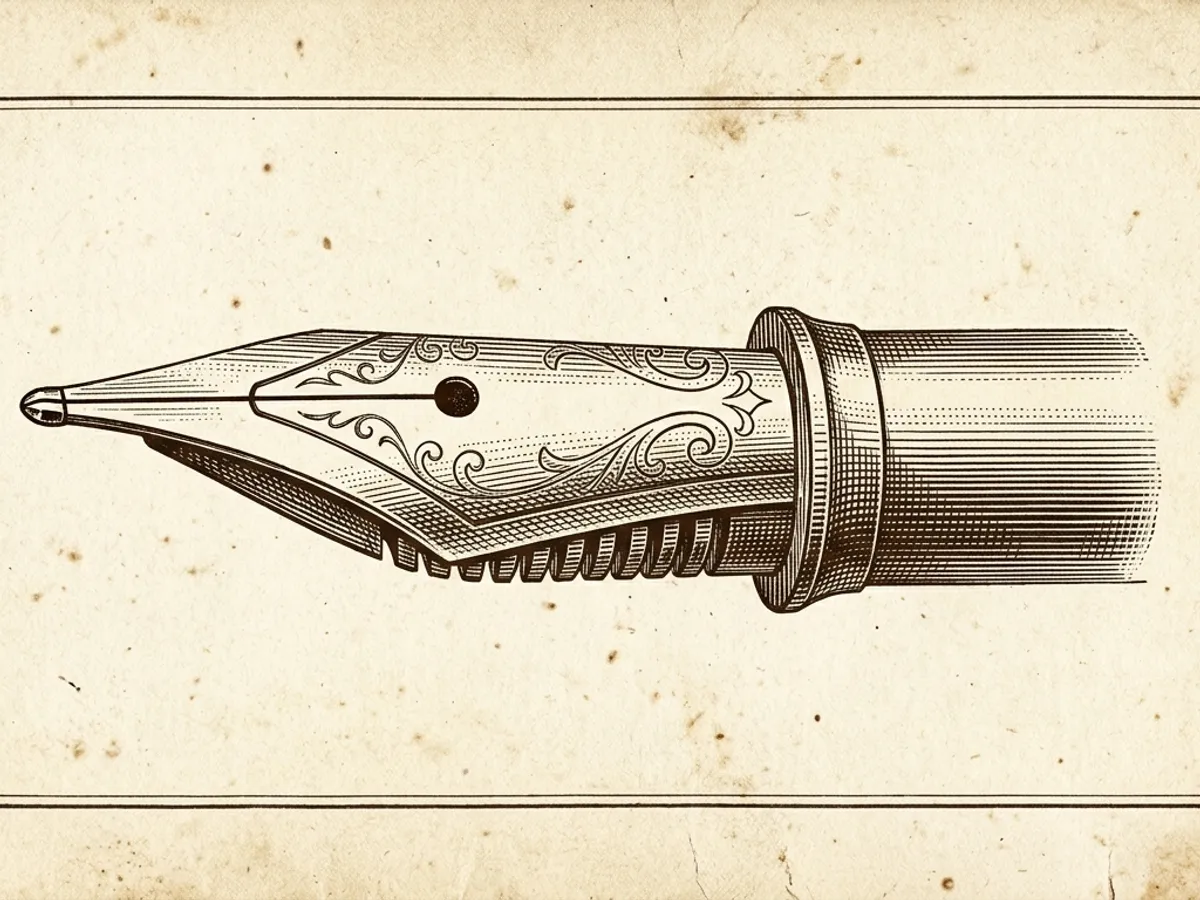
A fountain pen nib is the split metal tip that carries ink from the feed to the page. Unlike a ballpoint, which drags thick oil-based ink with a rotating ball, the nib works by capillary action. A narrow channel cut down the center of the nib — called the slit — wicks liquid ink forward as the writing tip contacts paper. The small ball of hard alloy at the very end, called the tipping material, determines how wide that ink line lands.
Nibs also flex slightly under hand pressure. A well-tuned nib springs back into its original position after each stroke, giving writing a slight spring and responsiveness that no ballpoint or rollerball can replicate. That spring, combined with the low viscosity of fountain pen ink, is what gives fountain pen writing its characteristic feel.
Two measurements define any nib: its size (how wide a line it lays down) and its material (steel or gold). Almost everything else — smoothness, springiness, overall feel — follows from those two factors and the quality of manufacturing.
Nib Sizes: From Extra Fine to Broad
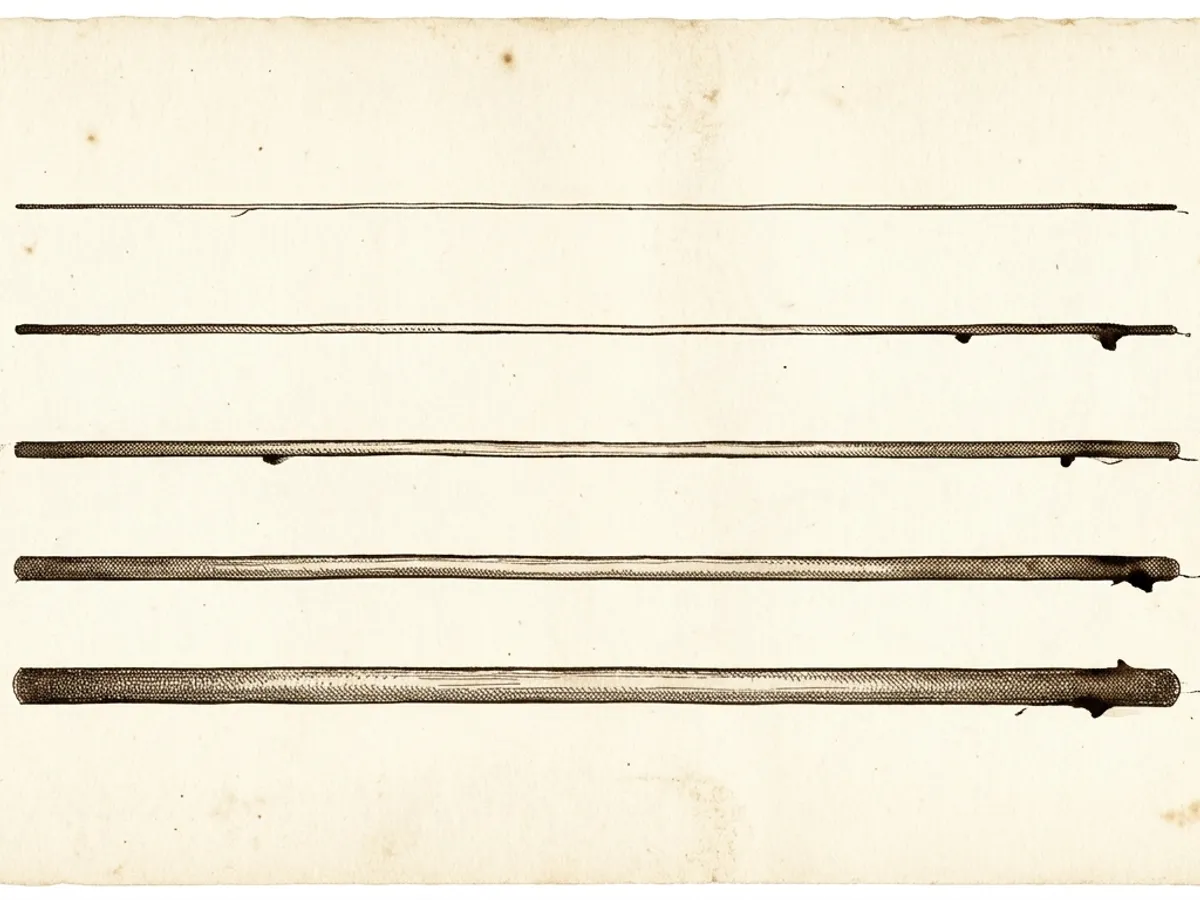
Nib sizes are printed or engraved directly on the nib face: EF (extra fine), F (fine), M (medium), B (broad), and BB (double broad). Less commonly, you’ll see numeric stub widths — 1.1, 1.5, or 1.9 — which refer to the tipping width in millimetres. Most manufacturers offer at least three standard sizes; many offer the full range.
Here is what each size actually produces on decent paper under normal writing pressure:
- Extra fine (EF): A precise, thin line ideal for small handwriting, annotations, and technical notes. Fine nibs can feel slightly scratchy on rough or low-quality paper — pair them with smooth, coated pages for the best experience.
- Fine (F): The most popular size in most markets. Clean enough for everyday notes, comfortable for most handwriting styles. A reliable first choice for new fountain pen users.
- Medium (M): Noticeably wetter and more expressive than a fine. Medium nibs show off ink properties — shading, sheen, shimmer — far better than finer sizes. Good for journaling and letter-writing.
- Broad (B): Bold, wet strokes. Ideal for signatures, correspondence, and showcasing dramatic ink colours. Less practical for dense note-taking or small handwriting on lined paper.
- Stub (1.1, 1.5, 1.9): A rectangular tipping that produces wide horizontal strokes and thin vertical strokes. This creates natural calligraphic variation in everyday handwriting without requiring any special technique. Often sold as an alternative nib option on pens that allow nib swapping.
One important practical point: nib size interacts strongly with paper quality. On standard copy paper, an extra-fine nib is safe but a broad nib will feather and bleed. On fountain-pen-specific paper — Rhodia, Clairefontaine, Tomoe River — even a broad nib stays crisp and clean.
Steel vs. Gold: What the Material Actually Changes
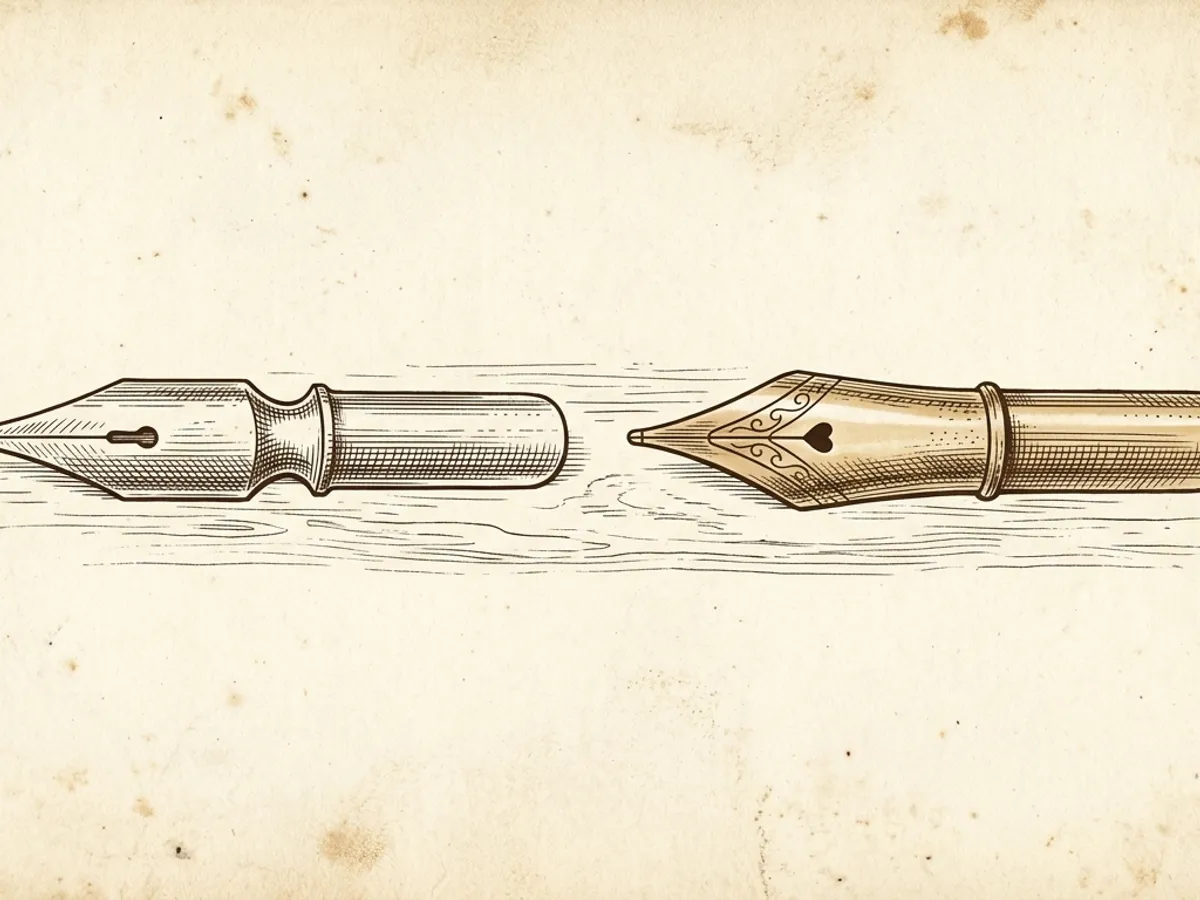
The marketing language around gold nibs can make this feel more complicated than it is. Here is a direct account of what the metal actually does and does not change.
Steel nibs are the default on most pens priced under about $80. A well-made steel nib is smooth, consistent, and entirely capable of daily writing over decades. Steel is stiffer and snappier than gold, which some writers prefer — it gives the pen a firmer, more decisive feel on the page. The steel nibs on well-regarded beginner pens like the Pilot Metropolitan and the Lamy Safari are excellent by any measure.
Gold nibs (typically 14k or 18k) offer two genuine advantages:
- Softer spring. Gold is more malleable than steel at equivalent thickness. The nib bends more easily under hand pressure and recovers slightly more slowly, creating a cushioned, bouncy sensation that many writers find reduces hand fatigue during long writing sessions. This is the primary functional reason to choose a gold nib.
- Corrosion resistance. Gold does not oxidize in ink. This matters most with aggressive inks — iron gall formulations, highly acidic inks, or certain shimmer inks that can cause micro-corrosion in steel over years of continuous use.
What gold does not reliably change: line width or smoothness. Both are determined by tipping material size and finishing quality, not the base metal. A 14k gold medium nib and a well-polished steel medium nib will draw lines of the same width. Smoothness depends on how well the tipping is finished — and a well-polished steel nib is often smoother than a poorly-finished gold one.
The practical upshot: for an hour or two of daily writing, steel is perfectly fine. If you write extensively — journaling, letter-writing, extended note-taking over multiple hours — the gentler spring of a gold nib becomes a meaningful comfort upgrade that is worth pursuing.
Understanding Japanese vs. European Sizing
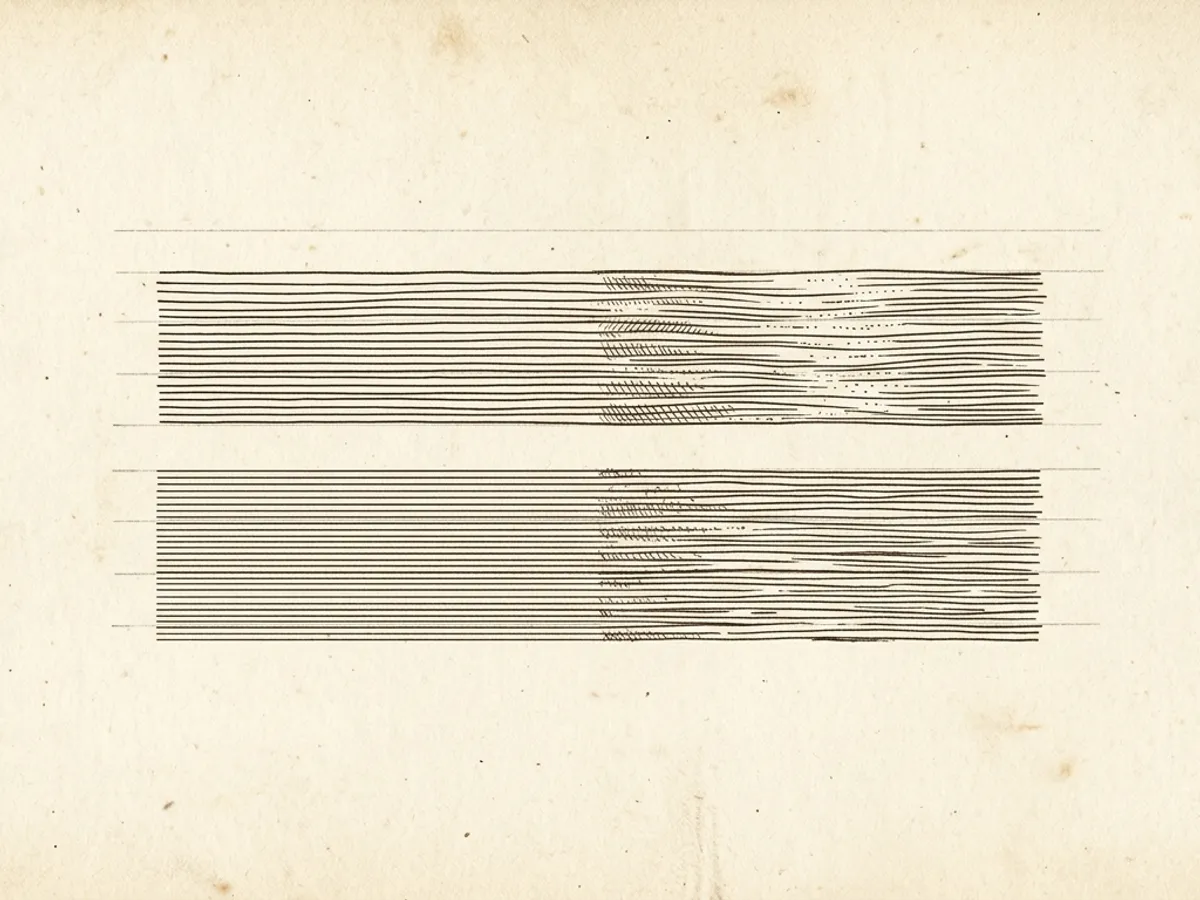
This is the most practically important distinction to understand before buying any fountain pen nib: Japanese nibs run approximately one size smaller than European nibs with the same printed label.
A Japanese Fine from Pilot or Platinum writes like a European Extra Fine. A Japanese Medium writes like a European Fine. This difference stems from the Japanese calligraphic tradition, which favors finer, more precise lines for writing kanji and kana characters. European sizing developed around a broader, more gestural Western handwriting tradition.
Use this rough conversion when switching between the two traditions:
| Your European preference | Japanese equivalent to buy |
|---|---|
| Fine | Extra Fine |
| Medium | Fine |
| Broad | Medium |
The real-world impact: if you’re moving from a Lamy Safari (German) to a Pilot Metropolitan, size up. If you’re moving from a Pilot to a Lamy, size down. Getting this conversion wrong is the most common reason a new pen feels unexpectedly scratchy or unexpectedly broad.
Size labeling is also not perfectly consistent within brands. Lamy’s F nibs write finer than most European F nibs. Pelikan’s M nibs tend to run wet and broad. Established fountain pen communities — the Fountain Pen Network, r/fountainpens, and specialist retailers like JetPens and Goulet Pens — provide the most reliable real-world impressions for specific models before you buy.
Special Nib Types Worth Knowing
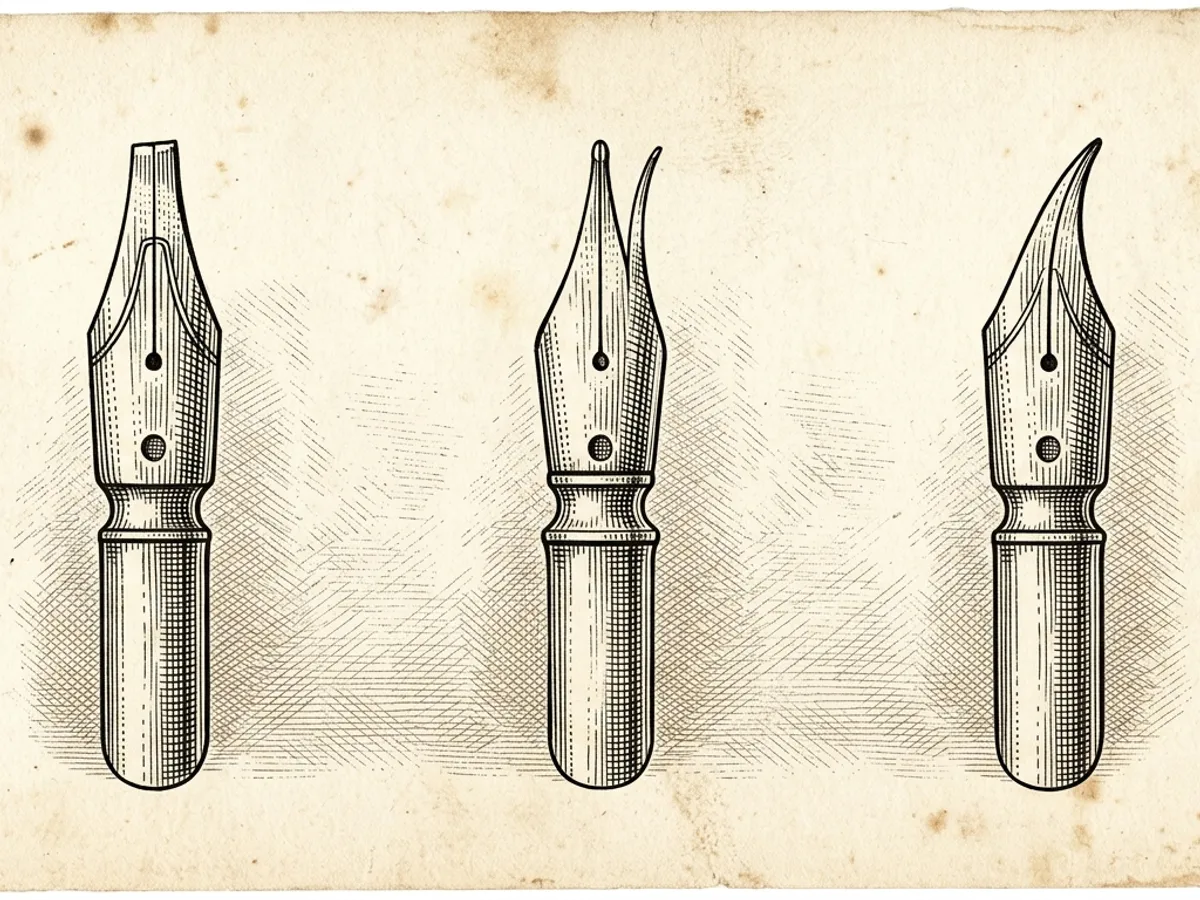
Beyond the standard round-tipped sizes, several specialty nibs are worth understanding before you buy:
Stub nibs have a rectangular cross-section instead of a round one. Horizontal strokes are wide; vertical strokes are narrow. The result is natural calligraphic line variation in ordinary handwriting with no technique change required. The Lamy Safari and Al-Star both accept swappable stub nibs — fitting a 1.1 stub to a Safari you already own is one of the best-value experiments in the fountain pen hobby.
Italic nibs are similar in shape to stubs but with sharper, more defined edges. They produce more pronounced line variation but require a consistent pen angle to perform well. If the pen isn’t held square to the page, line quality suffers immediately. Italics are better suited to deliberate calligraphy practice than to everyday note-taking.
Flex nibs spread at the tines under deliberate side pressure, creating line-width variation that mirrors traditional dip-pen calligraphy. True vintage flex — found on old Esterbrook, Waterman, and Swan pens — is expressive and sensitive. Most modern nibs marketed as “flex” are semi-flex or “springy” at best; honest manufacturers label them accordingly. Attempting to flex a non-flex nib by applying heavy side pressure will permanently spring the tines and damage it beyond easy repair.
Fude nibs have an upturned, bent tip. Held at a shallow angle, they draw broad brushstroke-like lines; held nearly vertically, they produce fine lines. The line width is controlled entirely by pen angle, not pressure. The Sailor Fude de Mannen is the most widely available example.
Music nibs are broad, deeply-channeled nibs originally designed for writing music notation on staff paper. They have multiple tines and produce expressive, wet, broad lines. Popular among calligraphers who want maximum ink flow on the page.
How to Choose the Right Nib for Your Writing
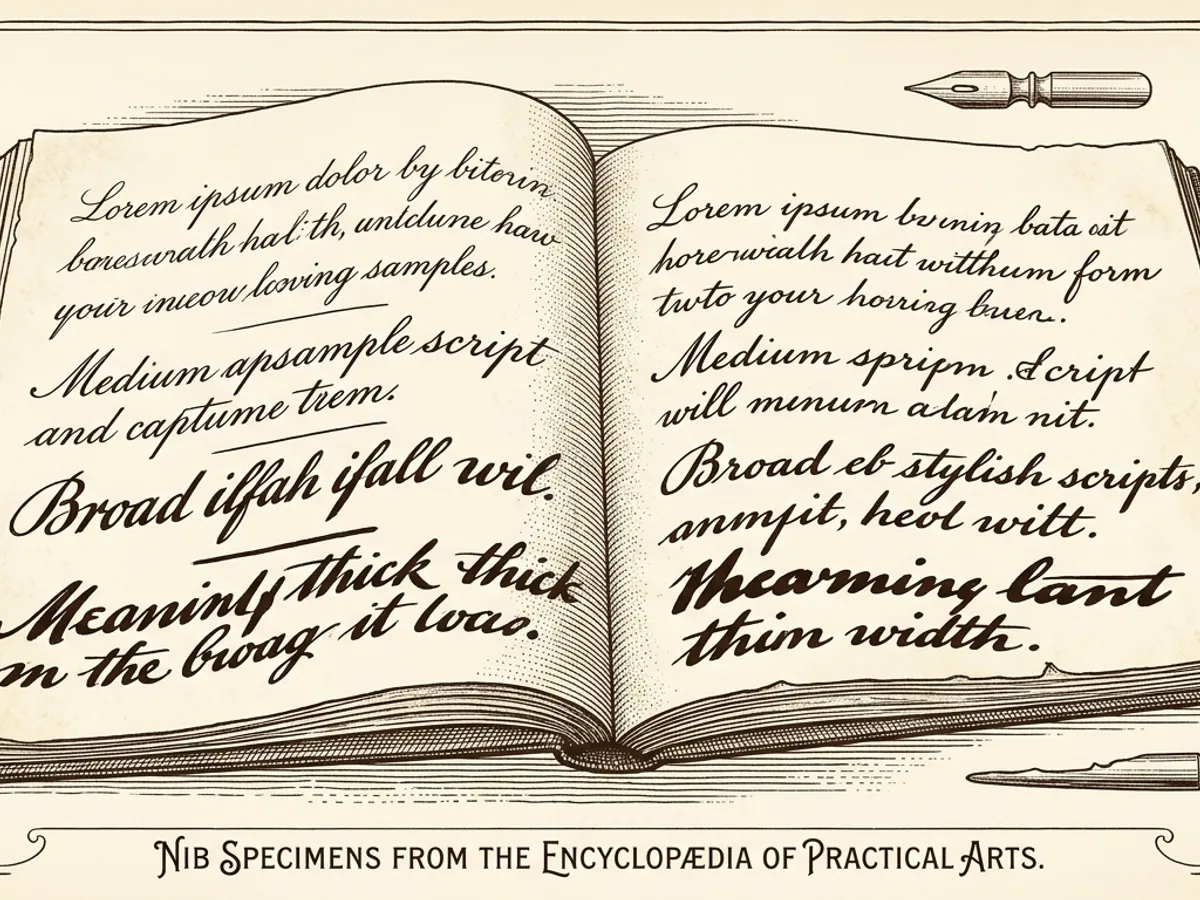
Start with your handwriting size and your most common paper.
If your handwriting is small and cramped, choose fine or extra fine. If your writing is medium-sized everyday script, fine or medium works well for most people. If your writing is large and expressive, or if you enjoy journaling in a way that shows off ink colors and character, medium or broad will serve you better.
Then match the nib choice to your primary use:
- Daily note-taking: A fine steel nib is ideal — practical, precise, and reliable on most paper. No need to spend more than $20–$30 for the pen.
- Long writing sessions (journaling, correspondence, professional writing): Consider a gold nib. The softer spring makes a real difference after an hour of continuous writing and is worth the investment.
- Showcasing ink: Choose medium or broad. Fine nibs hide shading, sheen, and colour depth. A medium or broad nib transforms a beautiful ink into something genuinely visible and vivid on the page.
- Calligraphic variation without practice: Try a stub nib. The 1.1 width adds character to everyday handwriting immediately, with no learning curve required.
The Best Fountain Pens by Nib Type
For each use case below, these are consistently available, well-regarded options:
Best fine steel nib for everyday use: The Pilot Metropolitan in Fine is the standard recommendation at its price point. The Metropolitan’s fine nib is smooth, true-to-size for a Japanese pen, and consistent across units. Pilot uses its own proprietary cartridge and converter system — the CON-40 or CON-70 converter is sold separately and does not accept standard international cartridges.
Best medium steel nib: The Lamy Safari in Medium is an excellent everyday driver. Lamy uses its own proprietary T10 cartridges and the Z28 converter. The Safari’s nibs are user-swappable without tools, which is a significant practical advantage: you can own one pen body and several nibs, changing them in seconds to match the task.
Best piston-fill pen for any nib size: The TWSBI Eco has a built-in piston filler and is available in multiple nib widths from EF to B, with some models offering stub options as well. Its large ink capacity makes it practical for heavy daily writers who dislike frequent refills. TWSBI uses its own proprietary filling system and does not take cartridges.
Best entry point to a gold nib: The Lamy CP1 offers a 14k gold nib at a price that doesn’t require a major commitment. It demonstrates clearly what gold spring feels like versus steel — that tactile comparison is worth making before spending significantly more on higher-end pens.
Best stub nib combination: Buy a Lamy Safari in any color, then add a Lamy 1.1 Stub replacement nib separately. The full combination costs under $50, and the nib swap takes five seconds without tools. This single combination demonstrates stub writing better than any written description can.
A note on buying: Amazon is a convenient source for fountain pens and accessories, but verify the exact model number and seller before purchasing. Specialist retailers — JetPens, Goulet Pens, Goldspot Pens — are often more reliable for pens specifically. Amazon remains excellent for inks and accessories where product authenticity is less of a concern.