Best Beginner Fountain Pen: Top Picks for New Writers
We earn from qualifying purchases as an affiliate, at no cost to you.
What Makes the Best Beginner Fountain Pen
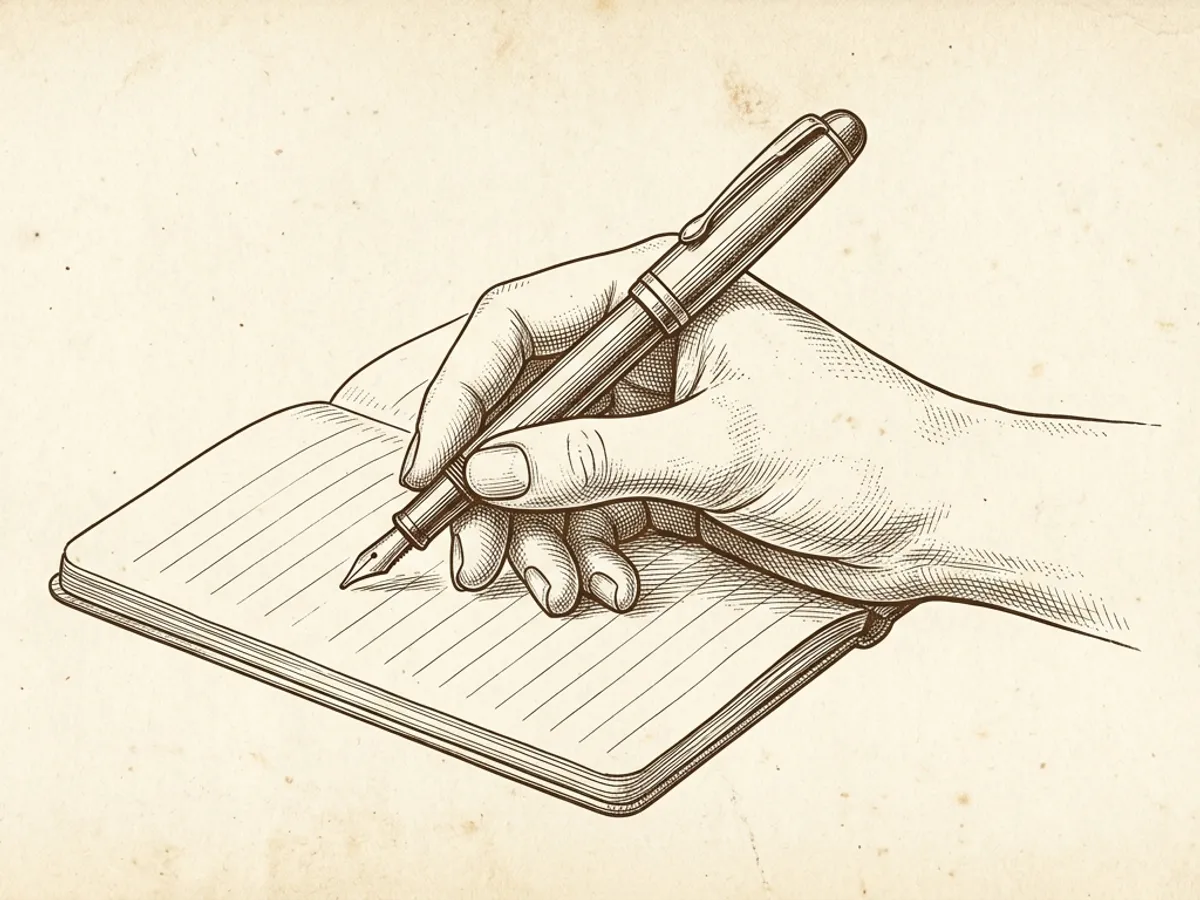
Not every fountain pen suits a first-time user. Some require careful nib tuning before they write smoothly; others use fragile components or finicky filling systems that punish anyone unfamiliar with the basics. The best beginner fountain pens write predictably straight out of the box, hold up to the bumps of daily use, and cost little enough that there is no real regret if the format turns out not to be your thing.
Four factors determine whether a pen belongs on a beginner shortlist.
Nib quality. The nib is the split steel tip that draws ink from the feed onto the page. A good factory tune means the two tines are aligned and the ink gap is consistent — producing a smooth, even line. A poor tune means skipping, hard starts, and a scratchy feel that has nothing to do with your writing pressure. The pens below are produced at a scale that keeps factory quality reliable.
Nib size. For most beginners, a medium (M) nib is the right first choice. Medium nibs perform acceptably on a wide range of paper types and tolerate small variations in writing angle and pressure. Fine nibs (F) draw a narrower line but are less forgiving of rough paper and can feel scratchy if the nib is fractionally off. If your natural handwriting is very small, a fine is worth considering — but expect to pair it with smoother paper.
Ink system. Ink cartridges are sealed plastic tubes that push into the pen and start working in minutes. They are the easiest starting point and require no technique. A converter is a small refillable reservoir that replaces the cartridge slot and draws ink directly from a bottle, opening up thousands of colors and costing less per milliliter over time. Every pen on this list works with cartridges out of the box; compatible converters are available for each at modest extra cost. One important thing to understand before buying: cartridge compatibility is brand-specific. Lamy cartridges only fit Lamy pens. Pilot cartridges only fit Pilot pens. Kaweco uses the standard international size that fits many brands. Never assume one brand’s cartridges will work in another’s pen.
Build durability. A first pen is going to live in bags, get set down on hard surfaces, and be picked up with an inconsistent grip. Robust build — whether brass like the Pilot Metropolitan or hard ABS plastic like the Lamy Safari — means the pen survives these conditions without leaking or cracking.
Nib Size in Practice
Think about the paper you write on most. Office copy paper is usually fine enough for a medium nib. If you fill small journals, take dense notes in the margins, or annotate books, a fine nib keeps lines from running together. Broad nibs (B) are enjoyable for expressive writing but wet and prone to feathering on absorbent papers — save those for after you know what you like.
Understanding Converters Before You Buy
Most fountain pen retailers sell the matching converter for each pen either as a bundle or for a few dollars extra. The converter is worth having from the start if you already know you want to explore different ink colors. If you just want to start writing, buy the cartridges and add the converter later when you have a reason to use it.
The Best Beginner Fountain Pens
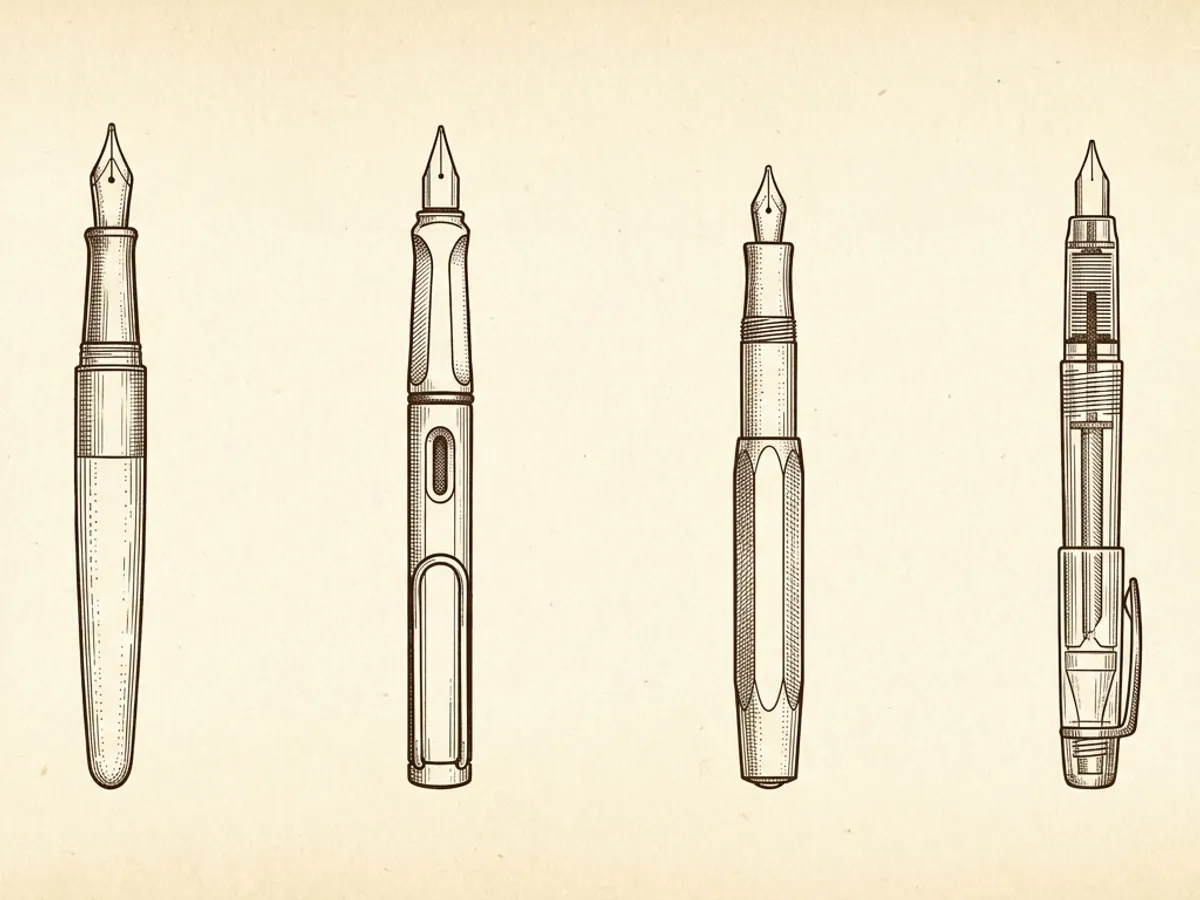
The four pens below cover a range from ultra-affordable to solidly mid-range, with different strengths to match different priorities. Any of them will give you a genuine, satisfying introduction to writing with a fountain pen.
Pilot Metropolitan — Best All-Rounder
The Pilot Metropolitan is the most consistently recommended beginner fountain pen in fountain pen communities, and that reputation has held for well over a decade for good reason. The medium nib is one of the smoothest available at this price point — well-tuned at the factory with a wet, consistent ink flow that forgives slightly imperfect writing angles. If you put it down and pick it up a few hours later, it starts immediately without coaxing.
The body is brass, which gives the Metropolitan real weight and a pen-like feel that surprises people who expect something plasticky. The heft is in the same range as a solid ballpoint pen, which most adult writers find comfortable and familiar. Finish options span plain matte metal, lacquered patterns, and vintage-inspired designs.
Ink system: the Metropolitan accepts Pilot’s proprietary IC50 and IC100 ink cartridges and the Pilot CON-40 or CON-70 converter for bottled ink. The CON-40 is a compact squeeze converter; the CON-70 uses a twist-piston mechanism and holds more ink. Neither Pilot cartridge format is compatible with other brands. For a first pen, start with the cartridges included in the box and add a CON-40 or CON-70 when you want to try bottled ink.
The medium nib is the one to choose. Fine is available and writes well, but the medium’s performance stands out relative to its cost — it is smooth enough that experienced fountain pen users regularly keep a Metropolitan as an everyday carry alongside pens costing ten times as much.
View the Pilot Metropolitan on Amazon
Lamy Safari — Best for Learning Pen Mechanics
The Lamy Safari has been made in Germany since 1980 and is built to survive decades of hard use. The ABS plastic body is nearly indestructible, and the robust aluminum clip grips shirt pockets and notebook covers without loosening. The pen can be fully disassembled and flushed in a few seconds without tools — an advantage for beginners learning to change inks.
The most distinctive feature is the triangular grip section. It is designed to guide the thumb, index finger, and middle finger into the standard three-finger writing position. Many beginners find this immediately helpful; others with a non-standard grip find it constraining. There is no universal answer — if you can handle one in a pen shop before buying, do. If not, check the return policy.
Ink system: the Safari uses Lamy’s proprietary T10 cartridges and the Lamy Z28 converter for bottled ink. Neither format accepts standard international cartridges or cartridges from other brands. What genuinely sets the Safari apart for a beginner is the interchangeable nib system. The steel nib snaps off the section and a replacement snaps straight on, without tools. This means you can try a stub nib for calligraphic writing, an extra-fine for precise notes, or a broad for expressive writing — all on the same pen body by buying a single replacement nib unit. For anyone interested in eventually exploring different line characters, this makes the Safari unusually good value as a starting point.
View the Lamy Safari on Amazon
Kaweco Sport — Best Pocket-Sized Starter
The Kaweco Sport is a compact pen when uncapped — short enough to fit in a jeans pocket without bulk. With the cap posted (pressed onto the back of the barrel), it extends to a comfortable full writing length. This makes it the practical choice for anyone who wants a fountain pen they can carry everywhere without thinking about it.
Kaweco uses the standard international cartridge format, shared by dozens of ink brands including Diamine, Caran d’Ache, Pelikan, and Faber-Castell. From day one you have access to a wide range of colors without being locked into a single brand’s limited cartridge line. Standard international cartridges are straightforward to find in most countries.
The base ABS plastic Sport is lightweight — noticeably lighter than the Metropolitan — which suits writers who want something unobtrusive and others less so. Kaweco also makes the Sport in aluminum and brass for those who want more weight later, but the plastic body is the right starting point.
The nib quality is reliable without being exceptional. Medium and fine are the most practical sizes for everyday writing. The main trade-off compared to the Metropolitan is that the Sport’s nib is not quite as impressive out of the box; what you get in return is genuine portability and maximum flexibility in ink supply.
View the Kaweco Sport on Amazon
Platinum Preppy — Best Ultra-Budget Pick
The Platinum Preppy is the answer to the question: what is the minimum you can spend to try a real fountain pen? At its price it has no meaningful competition. The nib quality, particularly in the fine (F) and ultra-fine (0.3) sizes, is genuinely good relative to cost — finer and more precise than many pens at twice the price manage to offer. The transparent barrel lets you see exactly how much ink remains in the cartridge.
The Preppy uses Platinum’s proprietary ink cartridges. Platinum builds a feature they call Slip and Seal into the cap: an airtight closure designed to prevent the nib from drying out even when the pen sits unused for extended periods. For a beginner who may not write every day, this is a real practical advantage over pens that need to be shaken or primed after sitting for a week.
The Preppy is not a lifetime pen. The lightweight plastic construction and modest heft make it feel functional rather than premium. What it is, precisely, is a low-risk way to discover whether fountain pen writing suits you before committing to something more substantial. If you try it and enjoy it, the next step to a Pilot Metropolitan or Lamy Safari is a natural and motivated upgrade.
View the Platinum Preppy on Amazon
How to Set Up and Use Your First Fountain Pen
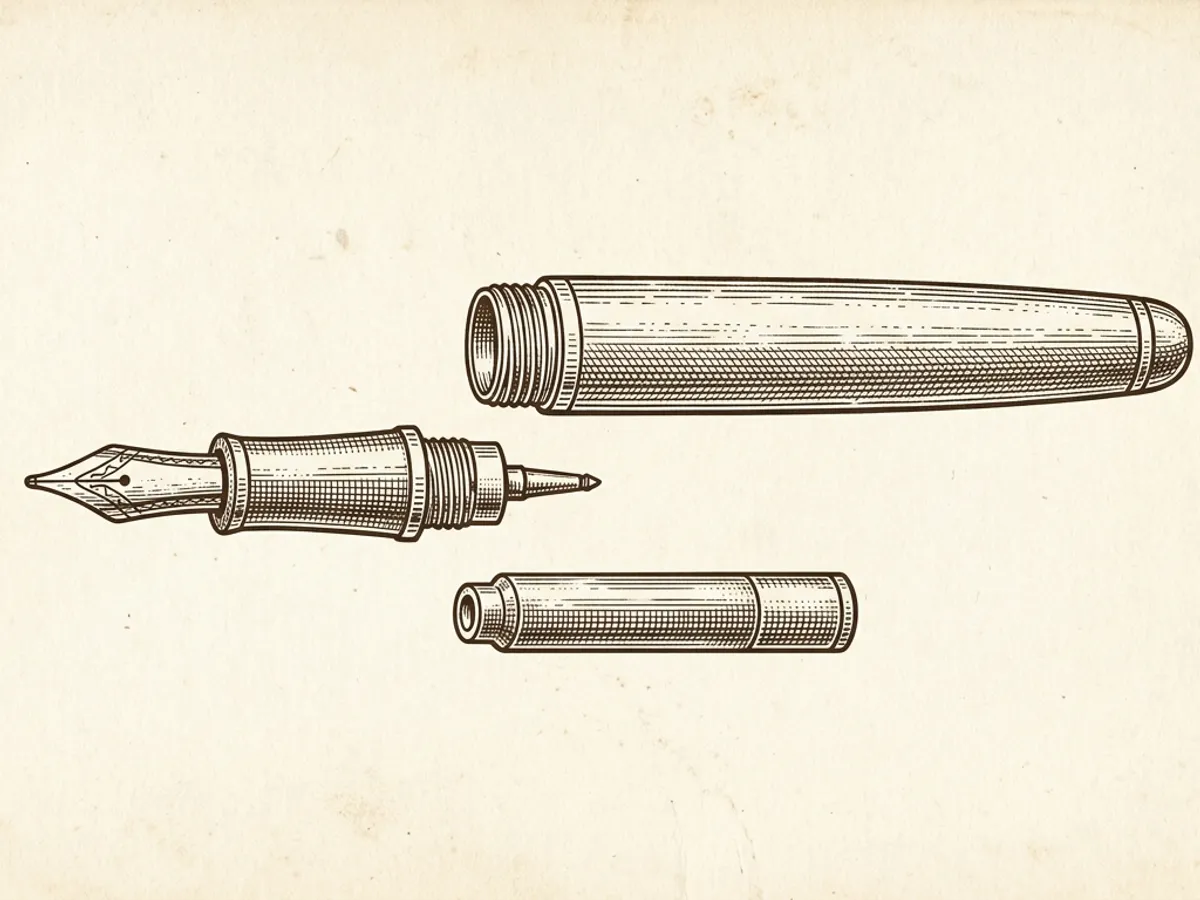
Getting a fountain pen writing for the first time is straightforward if you know the steps. Here is what to do.
Loading Your First Cartridge
Unscrew or pull off the barrel to expose the section — the tapered front part that holds the nib. Inside the section you will see a small internal nipple (a short spike) where the cartridge fits. Take the cartridge, hold it with the narrow neck pointing toward the pen, and push it firmly onto the nipple until you feel a click or distinct pop. That pop is the foil seal breaking and ink beginning to flow into the feed. Reassemble the barrel and set the pen nib-down.
For a thorough walk-through of every filling method — cartridges, converters, piston fillers, and eyedroppers — see How to Fill a Fountain Pen With Ink.
Priming the Feed
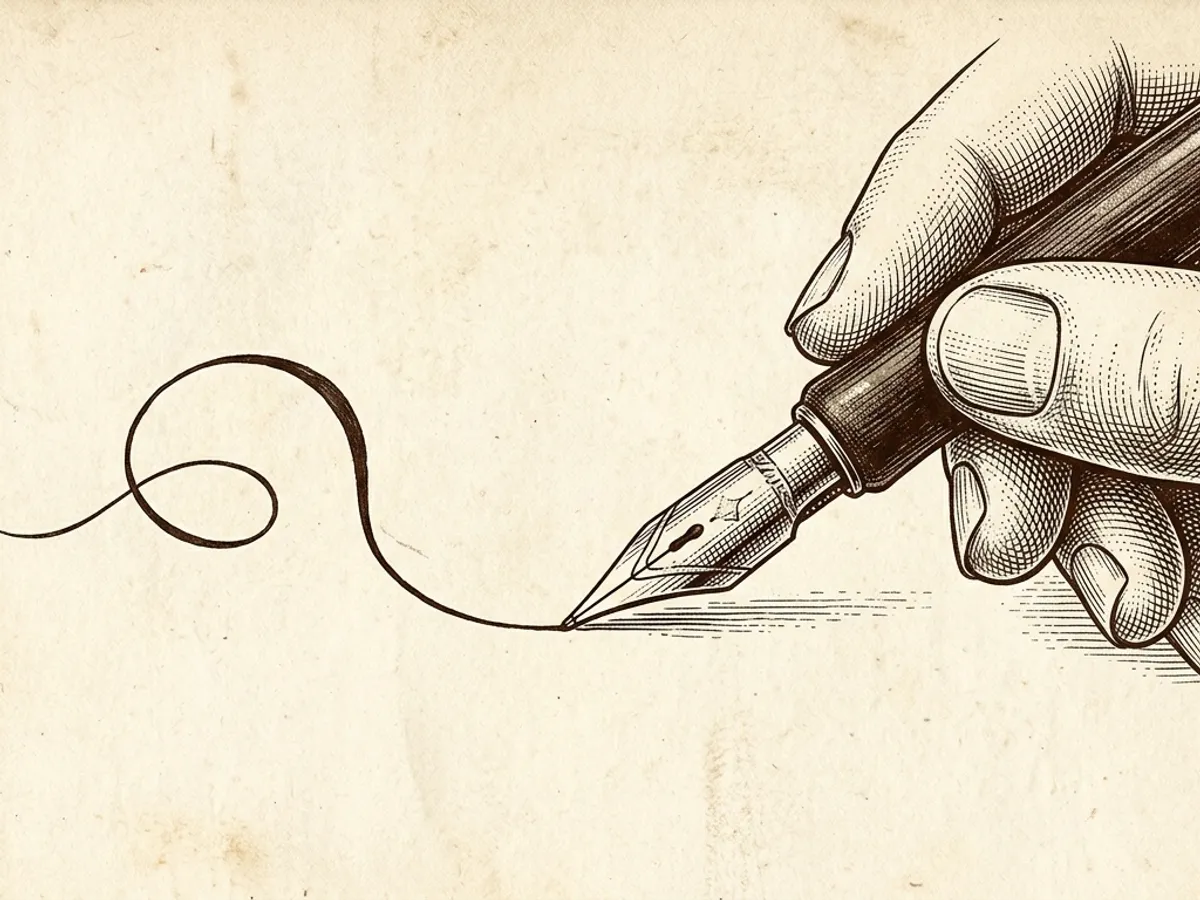
After loading a fresh cartridge, ink needs one to two minutes to travel through the feed to the nib by capillary action. Hold the pen nib-down and wait. To speed things up, tap the capped pen gently nib-down on a table several times, or tap the nib lightly on a folded paper towel until a small ink drop appears. Do not shake the pen vigorously — that can force too much ink through the feed and flood the nib.
The first few strokes on paper may be faint or slightly inconsistent. Write slow circles or loops on scrap paper until the ink flows evenly. Once it flows, it tends to keep flowing.
Paper Makes a Real Difference
Feathering (ink spreading along paper fibers) and bleed-through are not always the pen’s fault. Many standard notebooks and printer papers have absorbent or rough surfaces that cause problems with fountain pen inks, regardless of the pen’s quality. Smooth papers handle fountain pen ink cleanly: Rhodia, Clairefontaine, Leuchtturm1917, and Midori MD Paper are widely available, reasonably priced, and work well with all the pens and inks in this guide. Standard copy paper is acceptable for practice. If your pen writes badly on one paper but cleanly on another, change the paper before adjusting anything else.
Frequently Asked Questions
Which nib size is best for a complete beginner?
Medium (M) is the safest default for most adults. It writes smoothly on typical paper and tolerates inconsistencies in writing angle and pressure well. Fine (F) is worth trying if your handwriting is small or if you want precise, narrow lines, but pair it with smooth paper for the best results.
Do I need a converter to get started?
No. Every pen on this list works with ink cartridges straight from the box. A converter is worth adding once you want to explore bottled inks — which offer far more color choices and a lower cost per use. For a first pen, the included cartridge is all you need.
What bottled inks are safe to use in these pens?
Any ink labeled fountain pen safe is appropriate. Widely trusted options include Diamine (sold in dozens of colors), Waterman, Pelikan Edelstein, and Lamy ink. Avoid India ink, undiluted calligraphy inks, and pigmented inks not specifically designed for fountain pen use — these can clog the narrow feed channels and are difficult to clear.
How long does a cartridge last?
Writing volume and nib width both affect this. A medium nib used for several pages a day might exhaust a standard cartridge in a week or two; a fine nib used lightly could last several weeks. The Platinum Preppy’s transparent barrel makes it easy to see when you are running low.
My new pen is not writing. What should I do?
Start with the most common cause: the cartridge seal did not break. Press the cartridge firmly onto the nipple until you feel a definite pop, then hold the pen nib-down and wait two minutes. If it still does not write, tap the nib gently on a paper towel to coax ink forward. Still nothing? The feed may need a few minutes with the cap on. If the pen came out of storage, flush it with cool water, dry it, and load a fresh cartridge. For a full troubleshooting guide, see How to Fill a Fountain Pen With Ink.